Automations
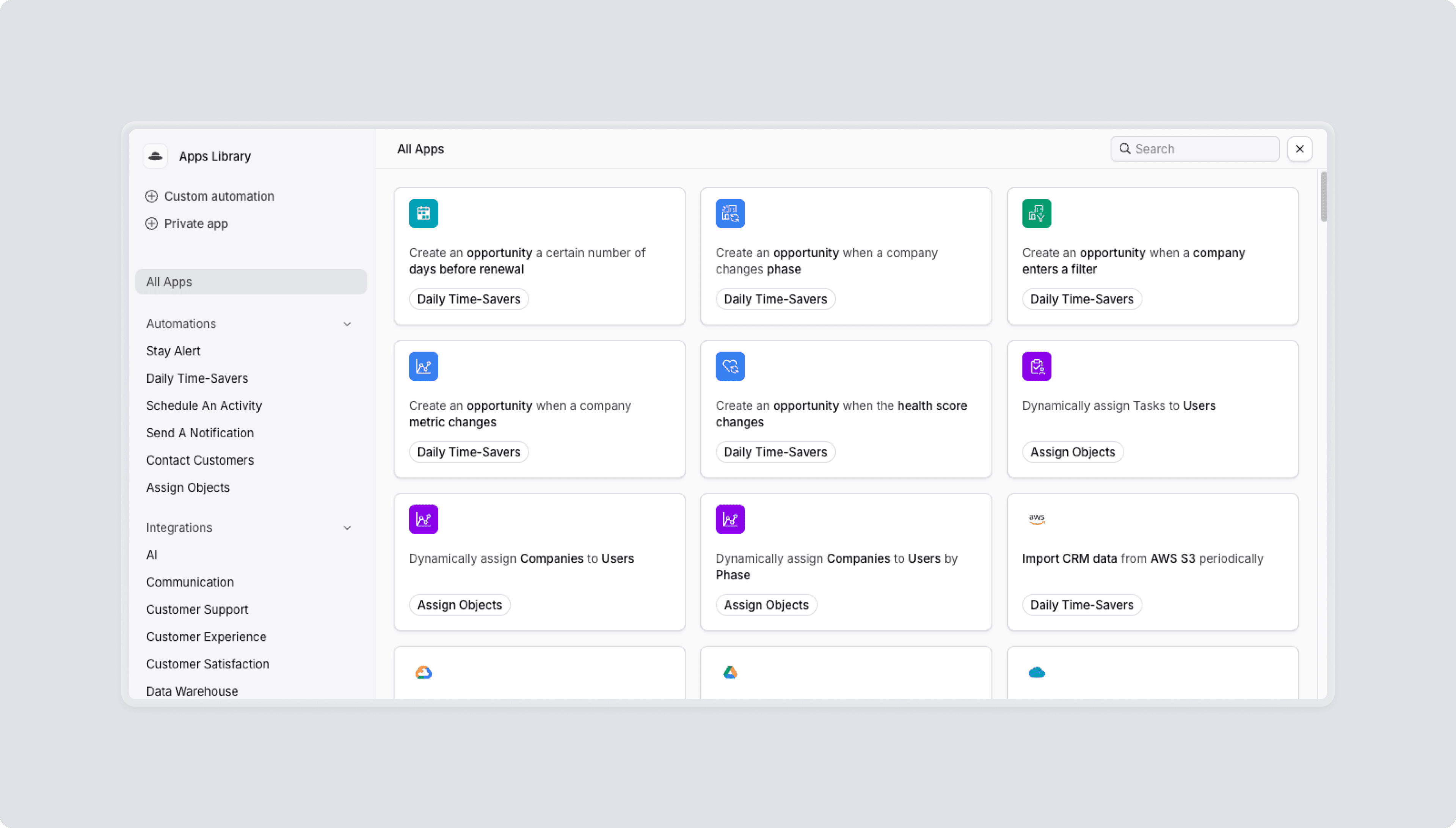
Customer teams drown in the day-to-day of operational work — assigning new accounts, scheduling follow-ups, copying data between systems, sending status updates — stealing time from strategic initiatives that moves the business forward. Planhat's Automations handling routine processes so your team doesn't have to. With our no-code editor, 100+ templates and AI-capabilities, teams can automate common workflows in minutes, from ownership assignment and dynamic workload balancing to QBR preparation. Your team can focus on building relationships and driving outcomes while the system handles operational overhead.
01
Trigger Proactive Workflows
Turn reactive firefighting into proactive account management. For example, trigger opportunity creation, schedule check-in tasks when usage drops, or kick off onboarding workflows when deals close — and allow your team to focus on strategic relationship building.
02
AI-Powered Intelligence at Scale
Let AI analyze account states to generate QBR summaries, rank companies by ICP fit, or identify at-risk accounts with recommended action plans — delivering insights and preparation work that would take hours manually, available instantly when you need them.
03
Balance Workloads Automatically
Dynamically assign accounts across the team based on capacity, territory, or expertise — eliminating manual routing and ensuring balance across the team.